
Friday, 19 July 2013

The Best Medicine
The Actual Cure For the Common Cold
After Sex, the Glass Is
Half Full
Battling Breast Cancer The Fun Way
You Can Eat That Zebra Cake Now And Not Gain 100 Lbs. Immediately
The Glorious Gift of Sleep
Bye-Bye, Cramps
It’s Better Than Makeup
Memory
Decreases Incontinence Among Seniors
It is only two days ago that the Deputy President William Ruto was quoted in the media calling for the possible arrest of the Prime minister Rt. Hon. Raila Amolo Odinga because of serious issues he raised concerning the IEBC.
As they say the guilty are afraid, barely days after Hon. Raila Odinga chastised the disgraced commission his aide Eliud Owalo is being accused by the Criminal Investigations Department and Kenyan Intelligence (Kenya Police) of working to distabilize the Jubilee Government.
Following an opinion piece which Mr. Eliud Owalo wrote in the Sunday Standard dated 14th July, 2013 titled ‘Why the Electoral Commission must be disbanded’ all hell has broken loose. The CID are making unsubstantiated, comical, cheap yet treasonable allegations against Eliud Owalo as follows:
1. That Mr. Owalo is conducting secret meetings and organizing youth around the Country, in major towns and slums for purposes of fomenting an uprising or revolt against the Jubilee Government.
2. That Mr. Owalo is organizing diplomats, foreign embassies, clergy and the civil society to rise up and oppose the Jubilee Government by causing dis-affection.
3. That all this Mr. Owalo is doing to mimic an Egyptian style revolution or uprising also part of what was called the Arab spring.
4. That Mr. Eliud Owalo has received millions of shillings from foreign embassies through a Nairobi Law firm is the guise of proceeds of legal transaction but which will be used to further the above objectives.
The above allegations are an insult to Kenyans as the source of this so called intelligence sources of information was a blog know as The Jackal News ran by a known TNA operative who clearly is carrying out errands for the Jubilee Government.
But let us be clear Eliud Owalo is but a decoy. The pursuits of Owalo is but a diversionary tactic, for the real target are his bosses; the coalition principals Hon. Raila Odinga, Hon. Kalonzo Musyoka and Senator Wetangula.
Kenyans are not fooled. We urge the Jubilee Government to mind the business of Kenyans, to respect and uphold the Constitution of Kenya and to cease and desist from using untoward tactics by ways of withholding benefits for the principals, frustrating their smooth movement in and out of the Country using our airports and making wild baseless allegations yet serious accusations. The Country must not be divided further.
Let us not revert to a police state and this Getapo tactics must stop.
SIGNED BY CORD COALITION
Hello my people!
I stumbled upon this shocking articles as i was doing my rounds on social media.You read and tell me what do you think:
The coalition for reform and demorcracy(CORD) had/has a well organised plan of starting a revolution of ousting the Jubilee led government.
A university of nairobi student who was approached by CORD mercineries led by Odinga's aide Eliud Owalo has exposed the dubious plan by revealing the specific date and venue of this revolution.
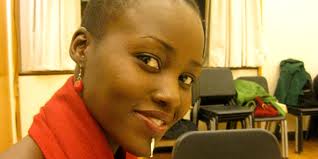
In 12 Years a Slave, Lupita plays Patsey, a slave on the Epps plantation. Her other credits include playing Perdita in "The Winter's Tale", (Yale Repertory Theater), Sonya in "Uncle Vanya", Katherine in "The Taming of the Shrew".
Lupita was a lead actress in the Kenyan TV drama Shuga in 2009.
She is a graduate of Yale School of Drama’s acting program and also holds a degree from Hampshire College.
12 Years a Slave is based on the 1853 autobiography of Twelve Years a Slave by Solomon Northup, a free black man who was kidnapped in Washington, DC and sold into slavery in Louisiana.
The movie, set to be released in theaters on October 18 of this year, is directed by Steve McQueen and also stars Michael Fassbender, Alfre Woodard, Chiwetel Ejiofor, Ruth Negga, Adepero Oduye, Paul Dano, Benedict Cumberbatch, Scoot McNairy, Garret Dillahunt, Paul Giamatti and Sarah Paulson.
check out the trailer here >>official trailer>>
This
is the previously untold story of the small band of Kenya Army officers
and men who faced off and subdued well-armed Air Force units that
briefly took power from President Moi in the early hours of August 1,
1982. The President was in hiding and the Chief of General Staff was for
some reason unreachable when four senior officers gathered around a
table at the Kenya Army Headquarters, Nairobi, to steer their country
back to civilian rule. Outside, the sound of sporadic rebel gunfire
echoed above the shouts of "Power! Power!" from university students. On
the eve of the 28th anniversary of the failed coup, retired general
Humphrey Njoroge — whose first role that night was to take minutes —
recounts the events to ROY GACHUHI.
There is no doubt in Lt-Gen (retired) Humphrey Njoroge's mind that the
coup attempt in which scores were killed and hundreds injured — on top
of huge losses to business — was wholly avoidable.
"Everybody who needed to know knew that there were plans for a coup and the leaders were known," he says.
"After the opening ceremonies of the Nyeri ASK Show on Friday, July 30,
the chief of intelligence, James Kanyotu, asked President Moi for
authority to arrest Sgt Joseph Ogidi, Cpl Charles Oriwa, Cpl Walter
Ojode and Cpl Bramwel Njereman from the then Kenya Air Force, Nanyuki
Station. He also wanted to arrest others from other KAF bases."
Njoroge, who was a major at the time, quotes a colleague who was privy
to that Nyeri meeting. According to him, Kanyotu told the President:
"Your Excellency, my people are in place. Can we arrest these people?"
At that time, the Special Branch had infiltrated the barracks and knew everything about the planned coup.
"But acting on contrary advice," Njoroge now recalls, "President Moi
withheld such authority. He decided to wait until Monday when the armed
forces would supposedly deal with the matter internally without
involving policemen who were considered subordinate in the disciplined
services structure.
"General Jackson Mulinge, who was Chief of the General Staff promised
the President that the matters would be dealt with at that time."
Chief of operations
But at midnight on August 1, 1982 rebel airmen stormed what is today the
Kenya Broadcasting Corporation headquarters, took control and announced
the establishment of a military government.
And so it is that Lt Gen John Sawe, who was Army Commander as well as
Deputy Chief of the General Staff, his deputy in the Army, Maj Gen
Mahmoud Mohammed, the Chief of Operations at Defence Headquarters Brig
Bernard Kiilu and Maj Humphrey Njoroge, a staff officer in charge of
training at Army Headquarters were hurriedly gathered at 2am the same
night to consider the options of a quick counter-coup.
As they spoke, Nairobi echoed to the sound of gunfire from the rifles of
rebel airmen of the Kenya Air Force drawn from Eastleigh and Embakasi
bases.
Several hours earlier, unknown accomplices had stolen the keys to the
armoury at Defence Headquarters, but a quick-thinking senior officer had
ordered fresh locks bought and fastened on the door.
These activities were the subject of that meeting in Sawe's office that night.
War games just ended
"We were planning how to restore President Moi's Government," recalls
the now retired Lt-Gen Njoroge. "That was the original strategy meeting
that reversed the 1982 coup attempt."
The meeting had not been convened by any higher authority. The four had
found themselves there by the dictates of the peculiar circumstances of
the time. All units of the Kenya Army were at that time en route to
Nairobi from Lodwar where war games had just ended.
Most of its leadership were there. But the senior-most commanders, after
routinely accompanying the President at the Nyeri Show, had retired to
their homes for the weekend.
Sawe presided over the meeting and opened it thus: "The C-in-C is not available. The CGS is not available. What must we do?"
Says Njoroge: "We didn't ask him where they were. We just assumed that he had tried to reach them in vain."

It fell upon Kiilu, the operations man, to make the first presentation
of the options open to the quartet who at that time comprised the entire
operational command of Kenya's Defence Headquarters. Kiilu was a
British-trained officer with a fine intellectual mind. He had a
remarkable capacity to analyse and synthesise issues with clarity and
mastery of detail.
According to Njoroge, Kiilu took good note of the fact that the rebel
airmen had struck when the army barracks were virtually empty.
Says Njoroge: "Kiilu told us, 'We must begin by assuming that Nairobi has fallen.'"
At this point in the presentation, Njoroge recalls that Mohammed was
shifting uncomfortably in his seat. There was little doubt that he
didn't like what he was hearing. Kiilu proceeded to recommend that they
wait for the returning army units and halt them in the western gates of
the city, in the vicinity of Kiambu, from where it would prepare its
assault on the city.
But before he could go on, and all of a sudden, Mohammed burst out:
"Bernard! This is crazy! We cannot wait that long! We must stop it now!"
Remembers Njoroge: "I was by far the most junior officer there. I was
only a major. I was timid. I did not make any contributions. If I spoke,
it was only if I was spoken to. I just took notes."
"What do you have in Langata?" Mohammed pressed. "What do you have in
Nairobi?" He was referring to troops. Evidently, he was calculating his
chances of success in fighting back, which he already seemed hell-bent
on at that moment.
Then he said, addressing his boss Sawe: "I suggest you give me
instructions. Tell me what to announce when I take back the station when
I stop this. I want you to tell me what to tell the country. And I
don't want interference from this headquarters. Humphrey, you are taking
notes!"
"Yes, sir!" Njoroge affirmed.
Sawe then asked Mohammed: "Are you sure you can do it?"
Mohammed replied: "Yes, sir!"
Sawe gave him the go-ahead. The meeting was over.
Njoroge noted how Mohammed had managed to take command of the operation
while at the same time having it on record that he was the authorised
operation commander.
Njoroge was impressed. Mohammed was a man who had barely seen the inside
of a primary school classroom, by far the least educated of the
officers present. He was just an infantryman, with no special skill or
trade to his name.
Over the decades, he had risen from private, the army's lowest rank, to
major-general, a mere two stars away from the very top. Semi-literate he
may have been, but he had other qualities going for him. Not least
among these was an acute understanding of human psychology and an
elephant's memory.
Here, he showed an uncanny understanding of a complex situation and at once assumed leadership.
Recalls Njoroge: "Citing urgency, Mohammed sought and obtained Sawe's
permission to leave, taking me along. We left Sawe and Kiilu behind.
'Humphrey,' he said as we left, 'continue taking notes.' On the way, we
bumped into Col Alex Mwangangi. He is the one who gave us the
frequencies we would use to communicate among ourselves."
Once inside the office, Mohammed told Njoroge his plan. "Humphrey, go to
the main gate. I want you to assemble all the crack shots. Tell Warrant
Officer One Kaptich to assemble all the crack shots. Specifically, I
want all those from 1KR who won trophies during the Armed Forces Rifle
Meeting. Go."
Best shots
1KR (1st Battalion, the Kenya Rifles) was the first military unit to be
established by Kenya's new government at independence. It was
established in February 1964. It is an infantry (foot soldier)
battalion. Mohammed, who had joined the colonial army in 1953, had
served as its commanding officer from 1969 to 1978. Though it was years
since he had left, he knew the troops there by their first names,
especially the best shots. Now he urgently sought them.
Njoroge requested half an hour to carry out the instruction. He returned
with two or three dozen soldiers carried in Land Rover ambulances. A
few soldiers, himself included, wore doctors' white coats. The ambulance
vehicles and white coats were for a purpose. It was now about 5am.
Sporadic gunfire from various parts of town three kilometres away
intermittently interrupted the early morning calm.
Mohammed looked at what Njoroge had brought and was satisfied. The
troops were not told where they were going or what they were going to
do. Only Mohammed and Njoroge knew the plan — which was to retake KBC,
the country's only broadcasting station.
In those days, he who called the shots at KBC, then known as Voice of
Kenya, owned the country. There was no other source of instant
information. The first target for all African coup makers was the
national broadcaster and Kenya's rebel airmen were working to script.
The convoy was readied and Njoroge took his seat in the first Land
Rover. Mohammed took his in the second one and the others lined up.
Then the convoy rolled out of Army Headquarters and headed for Argwings
Kodhek Road. It then turned left at the Silver Springs Hotel round-about
and joined Valley Road.
The operation to save Moi from his own catastrophic error had begun.
The convoy cruised down Valley Road, getting into Uhuru Highway, then
University Way and onto Harry Thuku Road where they headed for KBC.
Other vehicles followed. All over town were rebel soldiers and
university students shouting "Power!".
Says Njoroge: "Whenever we encountered them, we shouted "Power!" and
punched the air with our fists. A lot of looting was taking place
already. There were huge celebrations by university students around
Broadcasting House with loud music.
Just outside the Norfolk Hotel, they stopped and Njoroge, resplendent in
his doctor's coat, stepped out of his vehicle and went straight to the
KBC gate. Everybody else remained behind. He recalls: "There were very
many rebels there and they were armed. I identified a man who wore a
general's ranks on both his shoulders. On one shoulder was air force
insignia and on the other army insignia. It was a bit dark."
He approached that "officer" and told him: "We are from Memorial. We are
here to help you." He was referring to the Armed Forces Memorial
Hospital and made sure the "officer" saw the line of ambulances parked
outside the gate.
The officer looked pleased and said: "Good. Carry on." The encounter
lasted less than five minutes but that was all Njoroge needed to survey
the field. He walked briskly back to the Land Rovers.
He says: "I have reason to believe the man I spoke to was Ochuka. I did
not know him and neither did he know me. I will never be sure, but
something told me I had just spoken to the coup leader who from later
accounts turned out to be there at that time. There was something in his
demeanour that made him stand out from the rest."
Back to where the Land Rovers stood, Njoroge told Mohammed: "Sir, we
cannot attack them. They are too many and they are well armed. Even if
we succeed in overpowering them, we do not have an exit corridor. We
cannot leave and no reinforcement can reach us. We shall be trapped
here." He suggested they go to Kahawa Garrison and seek reinforcements.
He also said they should contact the Embakasi-based 50 Air Cavalry
Battalion to create a corridor when it was time to withdraw. Mohammed
asked him: "Are you sure this is what we should do?" Njoroge affirmed
and remarks: "Mohammed is a good senior officer who listens to good
advice. He is not opinionated. He just said, 'OK, let's go.'"
The convoy headed to the Globe Cinema round-about and took Murang'a Road
and drove to Kahawa Garrison where it arrived around 6.30am. At the
gate, they learned that Sawe had issued firm instructions that nobody
should be allowed in or out of all military bases in the country. They
were thus stopped by the sentries and flatly denied entry.
A furious Mohammed walked up to Cpl Halake, the sentry in charge and
asked him whether he knew who he was. Halake politely told him yes, he
knew he was the Deputy Army Commander, but no, he was not going to allow
him in.
His instructions from Gen Sawe, he told Mohammed, did not exempt
anybody, sorry sir. Mohammed cocked his gun and thundered: "I am going
to shoot you!"
Looking at the angry boss and perceiving the company he was in, the
sentry relented and opened the gate. There isn't any doubt in Njoroge's
mind that Mohammed meant his threat.
The convoy rolled in. Garrison Commander Col Njiru was holed up in a
meeting with his officers while the troops were in their quarters.
Mohammed took charge of the meeting. There were two officers from his
previous command at 1KR whom he particularly liked and wanted with him —
Maj Wanambisi and Maj Kithinji. Two others, Maj Cheboi and Maj Kiritu
from Langata, would also play crucial roles in his scheme of things.
"He wanted people he could trust," Njoroge says. "These obviously had to be people he knew very well."
Mohammed told the gathering that he wanted the troops gathered and the
top shots who had won trophies during the armed forces rifle
championships identified. That done, Maj Wanambisi was assigned the
vanguard group and Maj Kithinji the back-up. Weapons were then
distributed. Depending on their specialties, the troops were given
submachine guns, G3 rifles and light machine guns. Nobody was told what
the mission was.
The convoy then headed back to the city through Thika Road, Forest Road,
past Parklands Secondary School, Forest Lodge before finally stopping
at the Museum Hill round-about. That is where the final briefing took
place and it is where the troops were finally told what their mission
was.
Said Mohammed: "Tunaenda VoK na tunaenda kufa." ("We are going to VoK
and we are going to die.") He then told them the plan was to make the
rebel airmen surrender peacefully without a fight. But the orders were
to return fire when fired upon or to fire in pre-emptive self-defence.
This is exactly what happened in literally the next instant. Just as the
briefing was about to end, one Private Odero saw an airman take aim at
Mohammed who was standing prominently in front of the troops.
Instinctively, he let out a burst of machine gun fire that felled the
airman and several others standing near him. At that point, the plan
changed. It became a full scale assault.
Abandoning their vehicle after their final briefing, Mohammed's troops
inched towards the broadcasting station slowly, the crack shots taking
out drunken air force servicemen one after the other.
When it became apparent that they were under siege, one airman
exclaimed: "Kwa nini GSU wanatupiga?" ("Why are the GSU attacking us?")
He was under the mistaken impression that the attackers were GSU
officers because the coup had been timed to take place when the Army was
out of town. Coupled with the fact that the southern entrances to the
city were blocked by airmen from Embakasi, he was sure these troops,
coming from the direction of Westlands, could only be GSU personnel.
The Army force from Kahawa numbered less than 30. But it exacted a huge
toll among the drunken airmen, who were partying with university
students. The actual number who died in the assault may never be known,
but it was reliably estimated to be between 100 and 200.
At that time, there was no perimeter wall around the broadcasting
complex. The invaders were therefore able to enter from Uhuru Highway.
The first soldiers to reach the radio studios killed five rebels inside
there. They then went back and told Mohammed, who was close behind, that
the route to the studio was clear and Leonard Mambo Mbotela, the famed
broadcaster who had been kidnapped from his house and forced to announce
Moi's ouster, was still inside. Mohammed strode in, Njoroge with him.
"I am General Mohammed," he told Mambo, "I want you to announce that
Nyayo forces have retaken the country." Njoroge, who kept taking notes
of every detail of the operation, then gave Mambo a list of officers
whose names he was to broadcast as being at the station. These were
Maj-Gen Mohammed, Maj Wanambisi, Maj Kithinji, Maj Kiritu, Maj Cheboi,
Maj Mulinge and himself, Maj Njoroge.
He then went to the library and fetched a gramophone record, Safari ya
Japan by Joseph Kamaru. "Play this," he told Mambo who did. The record
and the composition of the list of soldiers were meant to reassure
soldiers everywhere that Nyayo was indeed back in the saddle.
"It was a psychological ploy," he says. "Not all the officers whose names I gave Mambo to read were at Broadcasting House."
Outside the station, the assault had turned into a chase and mop up
operation. Airmen were fleeing in numbers. But Ochuka, Njoroge was to
learn later, was still insisting he was Commander-in-Chief. Through the
armed forces communication system, he kept insulting Sawe and
threatening him with dire consequences for resisting.
It was then that Sawe ordered helicopters to blow up the communications
facility at the Eastleigh air force base. Without communications,
Ochuka's coup collapsed and he was soon on his way to Tanzania.
It was not until about 3pm that the invading party was relieved from
Defence headquarters. Accompanied by Njoroge, Mohammed then went DoD to
find Mulinge, Sawe and a few other senior officers.
The gathering embarked on mop-up plans. But first they had to get a
devastated Moi, who had been brought to town in an armoured convoy from
Kabarak led by Maj Gen Musomba, to announce to Kenyans that he was back
as President. Few Kenyans who watched him on TV that evening will forget
the crushed look in his face.
After that Moi, whose regime had already been fairly repressive,
launched a clamp down on dissent that gradually turned Kenya into a
police state.
TO BE CONTINUED


